
'%3e%3cpath%20d='M22.473%2020.43l-7.083-7.083c-.268-.268-.398-.592-.389-.972a1.37%201.37%200%200%201%20.417-.972%201.34%201.34%200%200%201%20.986-.403%201.34%201.34%200%200%201%20.986.403l8.056%208.055c.148.148.252.301.313.458a1.43%201.43%200%200%201%20.09.514c0%20.185-.03.357-.09.514s-.164.31-.312.458l-8.083%208.083a1.28%201.28%200%200%201-.973.389c-.379-.009-.703-.148-.972-.417a1.34%201.34%200%200%201-.403-.986%201.34%201.34%200%200%201%20.403-.986l7.055-7.056z'%20fill='%23ec4899'/%3e%3c/g%3e%3c/svg%3e)

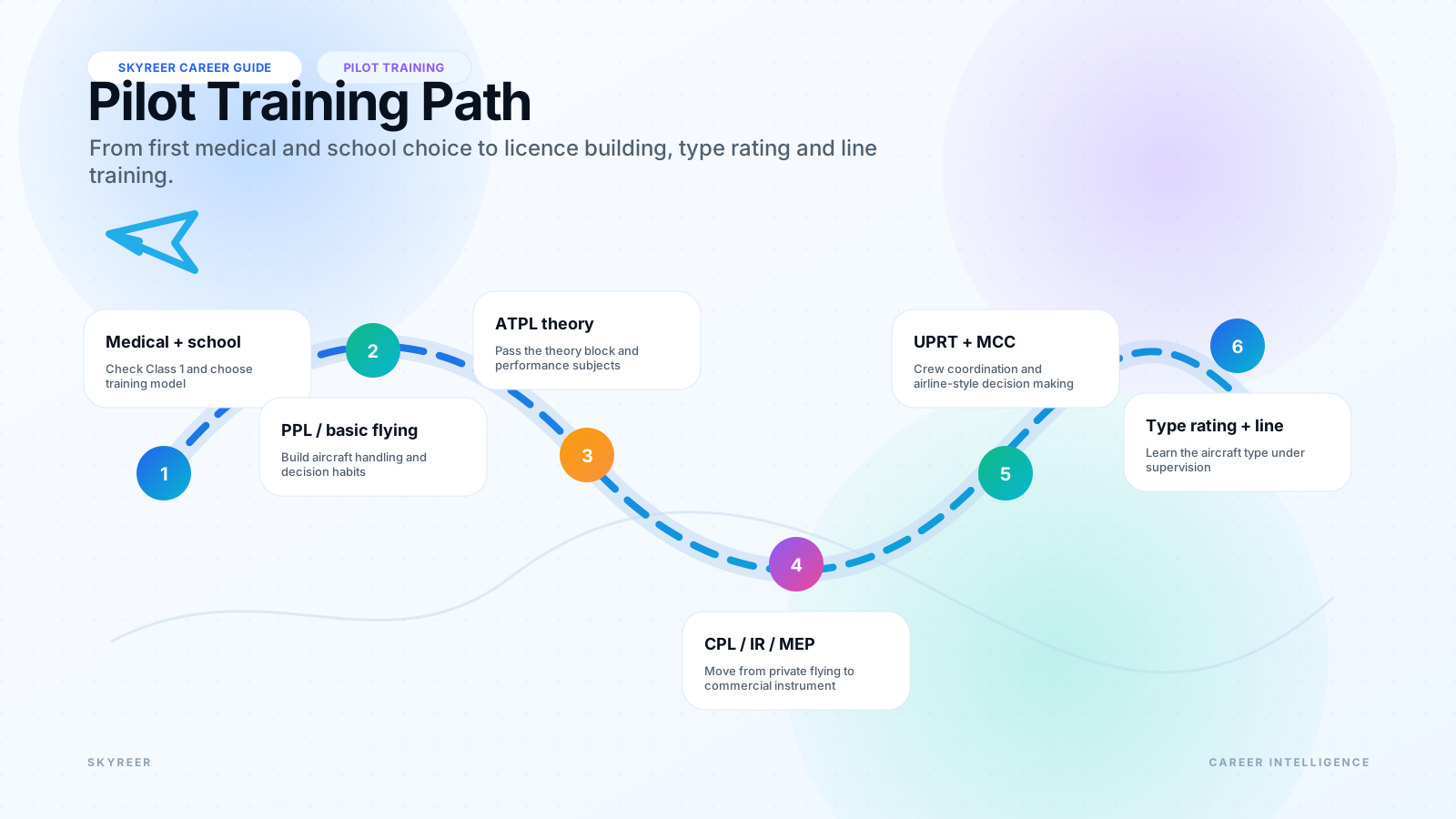
Pilot training is not one course. It is a sequence of theory, flight phases, licences, ratings, simulator training and airline-style crew training. Understanding the structure early helps you choose the right route and avoid expensive surprises.
The main decision is usually integrated versus modular training. Neither route is automatically better. The right choice depends on budget, risk tolerance, location, learning style, visa situation and airline hiring market.
Integrated vs Modular Training
Integrated training is a full-time programme that takes students from little or no experience through the required licences and ratings in one structured pathway. It can be efficient and airline-facing, but it usually requires a large upfront financial commitment.
Modular training breaks the route into separate steps. Students can complete parts at different schools, work between phases and control cash flow more carefully. It can be cheaper, but it requires stronger self-management and careful quality control.
Do not choose based on marketing language. Choose based on audited cost, training quality, instructor availability, aircraft reliability, weather, student support and real graduate outcomes.
Ground School
Ground school covers subjects such as air law, aircraft general knowledge, instrumentation, mass and balance, performance, flight planning, human performance, meteorology, navigation, operational procedures, principles of flight and communications.
ATPL theory is a major workload. Students who treat it as a side task often lose time, money and confidence. Build a study schedule before the first exam window, not after the first failed subject.
Basic Flight Training
Training usually begins with basic handling, circuits, navigation, emergencies and solo flying. Depending on the route, this may lead to a PPL or be embedded in an integrated syllabus. The early phase builds handling skill, checklist discipline and decision-making habits.
Hour Building
Modular students often complete hour building between PPL and commercial training. This phase should not be treated as sightseeing only. Use it to improve navigation, weather decisions, radio work, planning and cockpit discipline.
Commercial Pilot Licence and Instrument Rating
The CPL phase develops professional handling and accuracy. The instrument rating teaches flight by reference to instruments, IFR procedures, approaches, holds, departures, en-route navigation and abnormal management in instrument conditions.
The IR is one of the most important parts of professional training. It is also where weak preparation becomes expensive because extra simulator or aircraft time can add quickly.
Multi-Engine Training
Multi-engine training introduces asymmetric flight, engine failures, performance considerations and faster aircraft management. It is a short phase, but it requires precision. Poor checklist discipline becomes obvious quickly.
MCC, APS MCC and Airline Preparation
Multi-Crew Cooperation training prepares pilots for a two-pilot cockpit. It focuses on communication, workload management, monitoring, leadership, decision-making and standard operating procedures. Some candidates complete APS MCC courses designed to be more airline-assessment focused.
This is where the mindset changes from student pilot to crew member. Airlines want to see that you can operate with another pilot, not just fly alone.
Type Rating
A type rating qualifies a pilot on a specific aircraft type, such as an Airbus A320 or Boeing 737 family aircraft. In some cases the airline pays, in others the cost is bonded, shared or paid by the pilot. Never assume the type rating is included unless the contract clearly says so.
Choosing a Flight School
- Ask for a complete cost breakdown, not only the headline course price.
- Check instructor availability and aircraft serviceability.
- Ask how many students finish on budget.
- Speak with recent graduates, not only sales staff.
- Check refund rules, payment stages and what happens if training is delayed.
Before choosing a route, read the pilot training costs guide. If you already hold the licences, use the pilot application guide to prepare for airline selection.
Ready to compare real opportunities? Browse current pilot jobs on Skyreer and use the airline and employer profiles to compare requirements, bases, fleets, benefits and application routes.