
'%3e%3cpath%20d='M22.473%2020.43l-7.083-7.083c-.268-.268-.398-.592-.389-.972a1.37%201.37%200%200%201%20.417-.972%201.34%201.34%200%200%201%20.986-.403%201.34%201.34%200%200%201%20.986.403l8.056%208.055c.148.148.252.301.313.458a1.43%201.43%200%200%201%20.09.514c0%20.185-.03.357-.09.514s-.164.31-.312.458l-8.083%208.083a1.28%201.28%200%200%201-.973.389c-.379-.009-.703-.148-.972-.417a1.34%201.34%200%200%201-.403-.986%201.34%201.34%200%200%201%20.403-.986l7.055-7.056z'%20fill='%23ec4899'/%3e%3c/g%3e%3c/svg%3e)

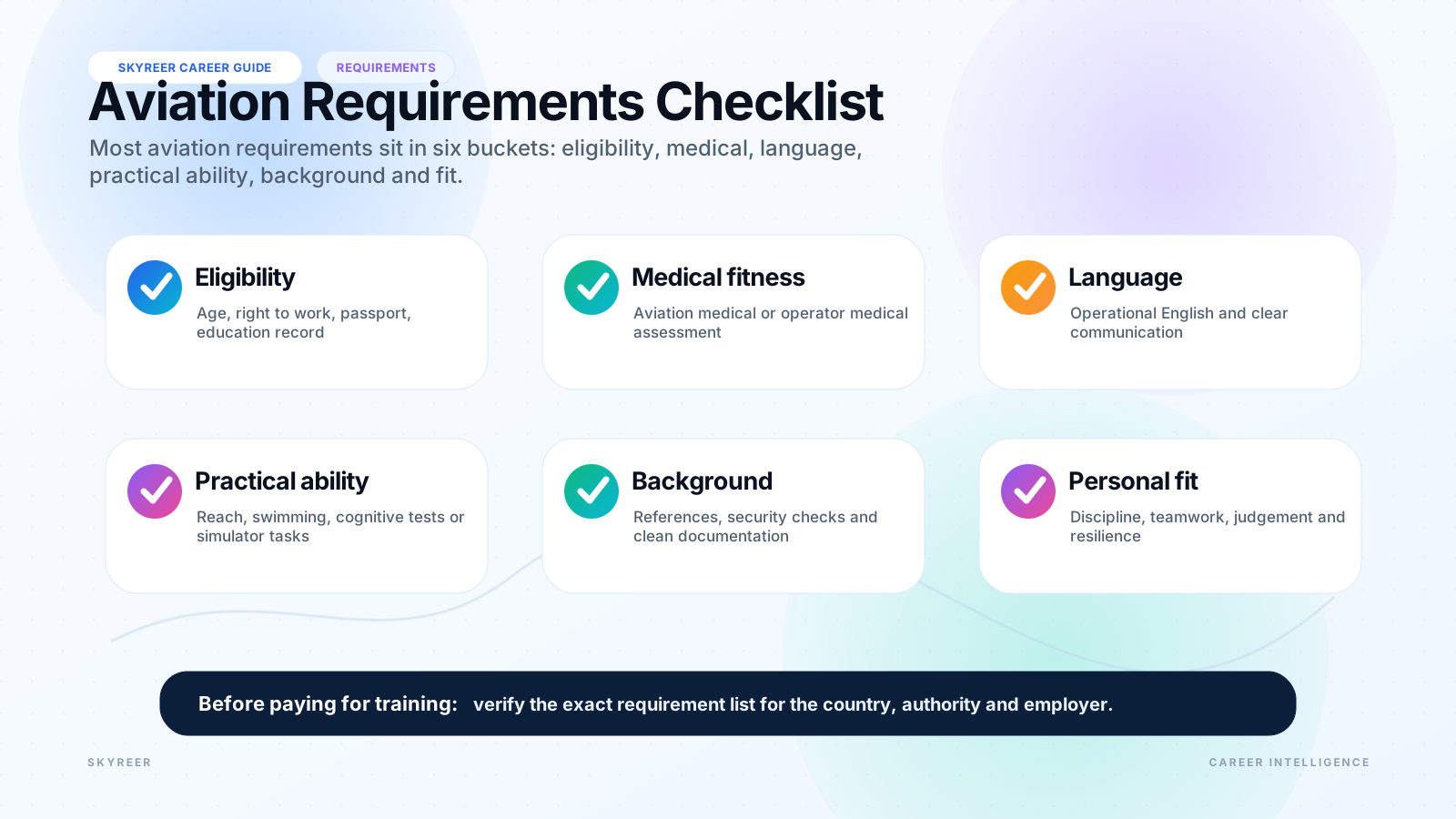
Air traffic controller requirements are strict because the job leaves very little room for unclear communication, poor judgement or inconsistent performance. The exact rules differ by country and provider, but most applicants are assessed across the same core areas: education, age, medical fitness, English, cognitive ability, background checks and personal suitability.
Do not treat one provider's criteria as a global rule. Always check the current requirements published by the ANSP, regulator or recruitment campaign you are applying to. ATC hiring rules can change between intakes.
Education Requirements
Most air navigation service providers require at least a high school diploma, A-levels, Abitur, baccalaureate or an equivalent national qualification. A university degree is usually not mandatory for trainee ATC entry, but it can help if the provider uses education or work experience as part of its scoring.
Subjects such as maths, physics, geography, English and computer-related courses are useful, but they are not a replacement for aptitude. Selection tests are designed to measure whether you can process information, react accurately and keep a mental picture of traffic under pressure.
Language Requirements
English is central to international aviation communication. ICAO requires pilots, air traffic controllers and aeronautical station operators involved in international operations to demonstrate language proficiency, with Level 4 commonly used as the operational minimum. You can review the official ICAO language proficiency information here: ICAO language proficiency.
Many providers also require the local language, especially for national operations, emergency coordination, internal communication and training. If the job ad asks for both English and a local language, assume that both will be tested seriously.
Medical Requirements
ATC medical standards are demanding. In EASA states, applicants for an ATCO or student ATCO licence need a Class 3 medical certificate. Medical checks can include eyesight, hearing, cardiovascular health, neurological history, mental health, medication use and general fitness. Current EASA ATCO licensing and medical material is available through the official EASA rules pages: EASA ATCO licensing rules.
Do not self-reject based on one medical detail you read online. Medical decisions are made by approved aviation medical examiners and regulators. Equally, do not hide anything. Missing or inaccurate medical information can end an application later, even if the first tests went well.
Age Requirements
Age limits vary. Some providers accept applicants from 18, others set higher entry ages, and some use upper age limits because training takes years and the role has retirement rules. For example, the FAA lists being under 31 as one of its entry-level air traffic controller qualifications in the United States, alongside citizenship, medical, security and testing requirements. See the current FAA qualification page for the official wording: FAA ATC qualifications.
For Europe and other regions, do not copy the FAA rule. Check the exact campaign. A 27-year-old may be eligible in one country and too old for a trainee intake somewhere else.
Personal and Cognitive Requirements
- Attention control: staying focused without overreacting to irrelevant information.
- Spatial awareness: understanding where aircraft are and where they will be shortly.
- Memory under pressure: holding clearances, callsigns, altitudes and instructions in mind.
- Decisiveness: choosing a safe course of action instead of freezing.
- Communication discipline: speaking briefly, clearly and without emotional leakage.
- Teamwork: coordinating with adjacent sectors, supervisors, pilots and technical staff.
These traits are usually tested through aptitude assessments, simulation exercises, interviews and training performance. You cannot fake them for long, but you can prepare by understanding the test format and practising concentration, accuracy and structured communication.
Background and Security Checks
Expect identity checks, criminal record checks and employment or education verification. Some providers also conduct security clearance because controllers work in safety-critical infrastructure. Be consistent with dates, addresses and documents from the start.
Before You Apply
Read the ATC training guide before applying. It shows what you are actually signing up for after selection. The ATC costs guide explains which costs candidates may still face even when tuition is provider-funded.
Ready to compare real opportunities? Browse current air traffic control jobs on Skyreer and use the airline and employer profiles to compare requirements, bases, fleets, benefits and application routes.